
Research Leads to New Thinking on Traditional Horse Diets
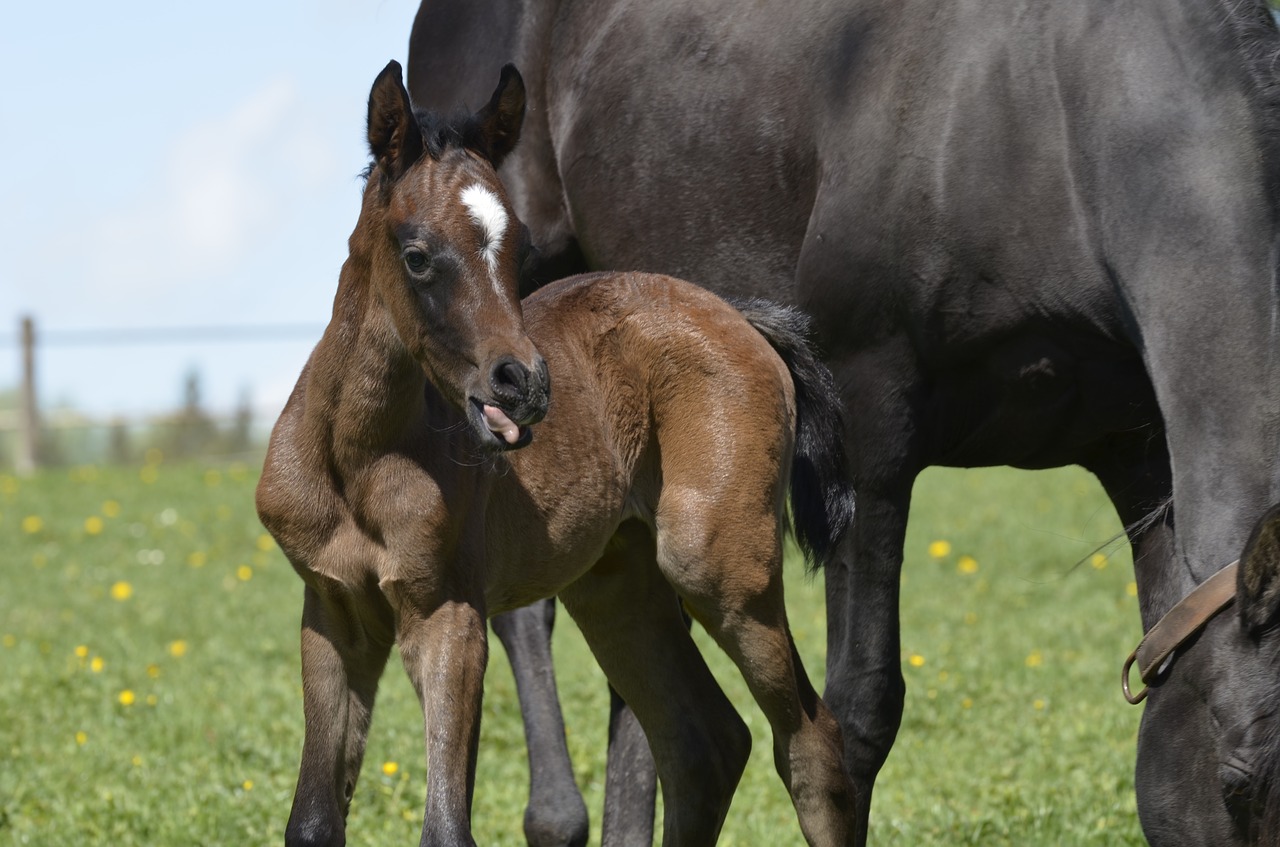
A study on feeding Thoroughbred foals by researchers at the Royal Agricultural University (RAU) has shown that high growth rates can be achieved when fed a high-fibre diet, compared to the traditional cereal-based feed.
Dr Simon Daniels and Professor Meriel Moore-Colyer, from the RAU’s School of Equine Management and Science, carried out their studies in collaboration with Eclipse Feeds in Ireland.

Traditions and the economic advantage when producing big athletic Thoroughbred foals for sale encourage owners to feed thoroughbred foals high levels of cereals. Such diets can influence gastric ulceration and developmental orthopaedic diseases, impacting negatively on future careers.
The research found that when fed a high fibre creep feed, Thoroughbred foals maintained a healthy gut environment by raising pH and lowering lactate production, compared with the conventional cereal-based feed.
The results dispel the industry-belief that feeding high levels of fibre to thoroughbred foals, in particular, will produce pot bellies and not sustain growth rates. In fact, the range of body growth measurements taken during the studies indicated that there was no difference in the growth rate of foals fed the high-fibre diet than those fed cereal-based feed. Suggesting, therefore, that the high-fibre feed provided adequate nutrition for growth, without the need for cereals which can pose a higher risk of growth abnormalities.
Based on these results, the researchers, together with Eclipse Feeds, have now produced a fibre-based feed, a Total Fibre Mix Ration (TFMR), for performance-horses which is proving highly successful when given to racing Thoroughbred, jumpers and event horses.
Professor Meriel Moore-Colyer, said: “
We are very excited about this feed as it is a whole new concept for feeding fast growing young stock. We hope the results of this work will convince producers to move away from the traditional high cereal diets and put their trust in this healthy, all fibre alternative.”
You can read the full research paper available in the journal of equine veterinary science: Science Direct.
The RAU offers a range of courses in equine science, bloodstock and performance horse management, and international equine and agricultural business management, with spaces available for September 2020.
You may also like to read