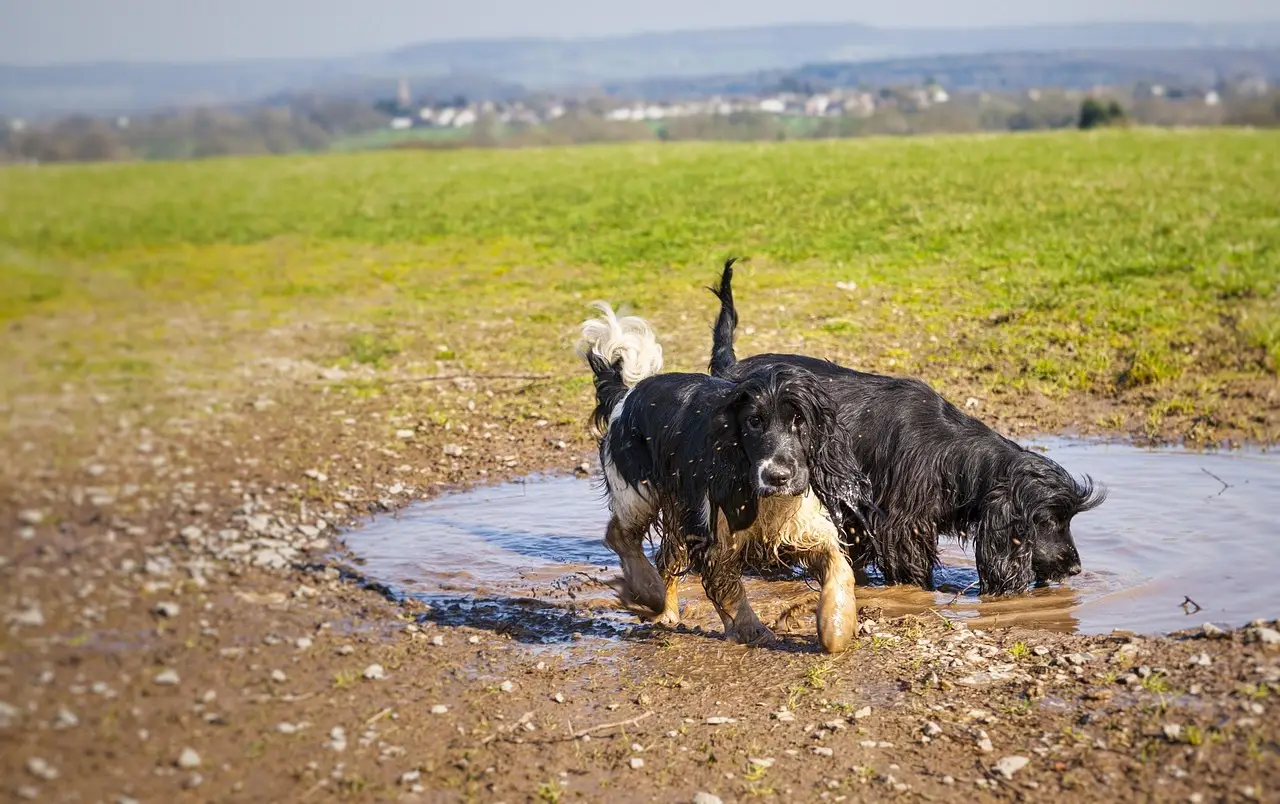

Dogs that live around stables, farms and fields have a very different parasite risk profile to city pets. Muddy gateways, long grass, wildlife traffic and shared spaces (tack rooms, lorries, showgrounds) can all increase exposure to fleas, ticks and intestinal worms.
This guide explains the main UK options, how to choose what’s right for your dog, and the practical yard-life habits that make treatments work better.
Affiliate disclosure: This article may contain affiliate links (including via Skimlinks). If you buy through these links, Everything Horse Magazine may earn a small commission at no extra cost to you.
1) Why are yard dogs different
If your dog:
- Walks through long grass, bracken or woodland edges
- Shares space with horses, cats, wildlife or visiting dogs
- Travels to events and showgrounds
- Swims in ponds/ditches or scavenges
Then it’s worth thinking in terms of year-round prevention, not just summer flea season.
2) Flea control: what works (and what usually doesn’t)
Fleas are more than an itchy nuisance: they can trigger flea allergy dermatitis and infest your home if you’re not careful.
Common UK flea treatment formats
- Spot-on treatments: applied to the skin at the back of the neck; typically monthly. Consider flea spot-on for dogs
- Oral tablets/chews: given by mouth; some work for a month, others longer. Consider flea tablets for dogs.
- Flea collars: long-acting collars that can offer extended protection. Consider a flea collar for dogs
- Household/environment sprays: useful if you’re dealing with an active infestation.

What to do in a horsey home: if your dog has had fleas once, treat it like a yard management problem, pet treatment plus environment control.
Quick add-ons that actually help
- A flea comb for dogs can help you check whether you’re winning the battle.
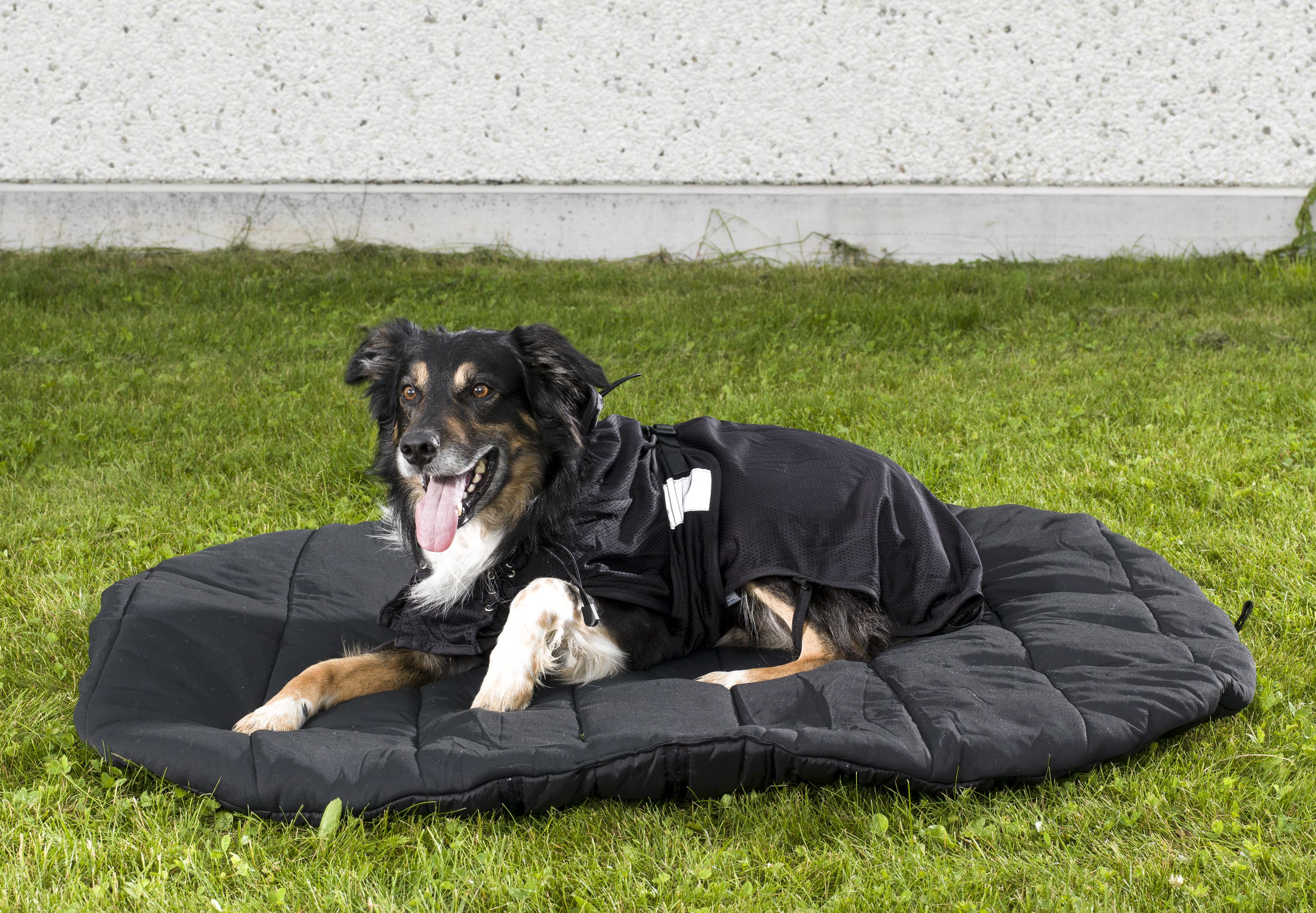
- Wash bedding regularly (see the environment checklist below) and consider a washable dog bed if your current one holds onto eggs and dirt.
3) Tick control: prevention + daily checks
Ticks are a big deal for rural dogs because they’re easy to pick up in long grass and can be hard to spot under winter coats.
Tick prevention options
- Tick-repellent spot-ons or collars (some repel and/or kill ticks)
- Oral tick treatments (kill ticks after they bite) – image example below.

Your vet can advise which approach suits your dog’s lifestyle and health history.
Yard-proof habit: the 60-second tick check
After walks (or a day at the yard), check:
- Ears and around the collar line
- Under the front legs and armpits
- Groin area
- Between toes
- Around the tail base
If you’re regularly in long grass, keeping a tick remover tool in your grooming kit, car and at home is a genuinely useful habit.

4) How to remove a tick safely (don’t improvise)
If you find a tick, remove it promptly and correctly. The PDSA advises using a tick removal tool and sliding it under the tick close to the skin. Watch this useful video from the Blue Cross on how to remove a tick.
Practical yard tip: keep a spare tick twister in your lorry/horsebox first aid kit.
5) Worming: match the plan to what your dog actually does
Worming isnt one-size-fits-all. Dogs can pick up worms through scavenging, hunting, raw feeding, contact with faeces, or eating slugs/snails (depending on the parasite).
Typical worming options (UK)
- All-round worming tablets for dogs (broad spectrum)
- Tapeworm treatment for dogs (often discussed separately depending on lifestyle)
- Testing approach (where appropriate) with a worm egg count test for dogs

If your dog is around a yard, travels a lot, or you have children in the household, its worth discussing a structured plan with your vet.
6) Don’t forget the environment checklist
Treatments work best when you also tighten up the basics:
- Wash dog bedding on a hot wash (check label guidance) and consider a washable dog blanket for muddy days
- Vacuum floors, skirting boards and car boot regularly
- Keep a dedicated towel for winter field walks
- Don’t let dogs scavenge droppings or dead wildlife
- Pick up poo promptly (especially around shared areas)
- If you’re dealing with accidents indoors, an enzymatic cleaner for pet accidents is often more effective than standard cleaners
7) When to speak to your vet urgently
Contact your vet if your dog:
- Seems unwell after a tick bite (lethargy, fever, lameness)
- Has persistent diarrhoea, weight loss or a pot belly
- Has severe itching, hair loss or broken skin
- Is very young, pregnant, elderly or has underlying health issues (treatment choices can differ)
Quick takeaway
For rural and equestrian homes, the best results usually come from:
- A year-round plan (not reactive treatment)
- Tick prevention plus daily checks
- Worming matched to lifestyle
- Good home/yard hygiene to stop reinfestation
Veterinary note: Parasite control isn’t one-size-fits-all. Always read the product label and speak to your vet for advice, especially for puppies, pregnant dogs, or dogs with health conditions.