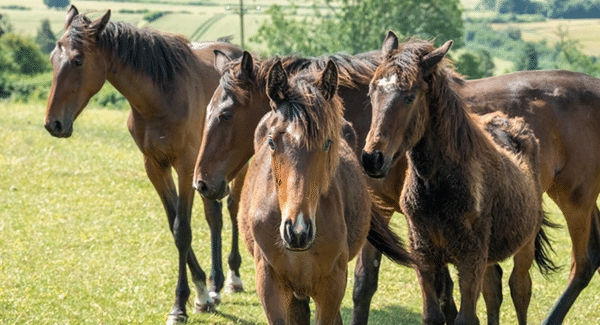
More than 150,000 people have signed a petition calling for greater protection for Dartmoor’s iconic semi-wild hill ponies amid growing concerns that proposed grazing agreements could lead to a dramatic reduction in their numbers.
Campaigners warn that as many as 90% of the remaining population could be lost if changes to grazing management on Dartmoor proceed without amendment.
The controversy has attracted national attention, drawing responses from MPs, conservationists, equestrians and government bodies. At the heart of the debate is how future environmental stewardship agreements could affect the number of animals allowed to graze on Dartmoor’s commons and whether ponies could ultimately lose out to more commercially viable livestock such as sheep and cattle.
Why Are Campaigners Concerned?
Friends of the Dartmoor Hill Pony and the Dartmoor Hill Pony Association argue that proposed grazing contracts would count ponies alongside sheep and cattle within overall livestock quotas.
Campaigners claim this could force commoners, who hold traditional grazing rights on the moor, to reduce pony numbers in favour of livestock that generate a direct income. They estimate that the resulting reduction could be between 60% and 90% of the current Dartmoor Hill Pony population.
The concern comes at a time when Dartmoor’s semi-wild hill pony population is already at historically low levels. According to campaigners, numbers have fallen from around 7,000 animals in 1999 to fewer than 1,000 today.
Campaigners warn that further losses could threaten the long-term future of one of Britain’s oldest native pony populations.
More Than Just a Symbol of Dartmoor
For thousands of years, ponies have been part of Dartmoor’s landscape and culture. However, conservation experts also point to their ecological importance.

Unlike sheep and cattle, Dartmoor ponies readily graze invasive Molinia grass and other coarse vegetation that can dominate large areas of moorland. Their grazing behaviour helps create a more varied habitat that supports native plants, insects and ground-nesting birds.
The independent Fursdon Review of Protected Site Management on Dartmoor previously described Dartmoor ponies as “invaluable for conservation grazing” and recommended that actions likely to reduce pony numbers should be avoided.
Natural England Rejects Cull Claims
Natural England has strongly disputed reports that it has proposed a cull of Dartmoor ponies.
In a statement published on 9 June, the organisation said claims that it had recommended a 90% cull were false. It stated that it has neither the power to order a cull nor advised one. Natural England also reiterated that it wants to see ponies remain a central part of Dartmoor’s grazing system and recognises their cultural and ecological importance.
The organisation acknowledged concerns surrounding livestock calculations but stressed that decisions about which animals graze the commons remain with landowners and commoners, not Natural England itself.
Natural England said:
“Dartmoor ponies and hill ponies are part of the cultural and ecological identity of Dartmoor.”
Political Pressure Mounts
The issue has rapidly moved beyond the equestrian sector and into national politics.
MPs from across the political spectrum have called for government intervention, arguing that Dartmoor ponies should be treated differently from commercial livestock because of their unique environmental role and heritage value.
The Government has also sought to reassure campaigners. A spokesperson for the Prime Minister recently stated:
“This government will not allow a cull of Dartmoor ponies.”
However, campaigners maintain that unless changes are made to how ponies are treated within grazing agreements, the economic realities facing commoners could still result in substantial reductions to pony numbers.
Petition Tops 150,000 Signatures
The petition, titled “Dartmoor’s Hill Ponies Face Extinction. They Need Your Help Now”, has attracted more than 150,000 signatures and continues to gain support.
Campaigners are calling on the Government, Defra and Natural England to ensure the future of Dartmoor’s semi-wild pony herds and to recognise their unique conservation value when developing future grazing agreements.
Supporters argue that without intervention, Dartmoor could lose up to 90% of its remaining hill ponies over time, fundamentally changing the landscape and heritage of the National Park.
How to Support the Campaign
The petition remains open and continues to gather signatures.
Campaigners hope the strength of public support will encourage policymakers to provide specific protections for Dartmoor’s remaining semi-wild pony herds and secure the future of one of Britain’s most recognisable native equines.
Visit the campaign here change.org/p/dartmoor-s-hill-ponies-face-extinction-they-need-your-help-now